Haaland breaks two of Messi's Champions League records
In brief
Manchester City striker Erling Haaland became the fastest and youngest player to reach 60 Champions League goals with a brace in the 4-2 home defeat to PSG on 14 October 2026. Lionel Messi needed 80 games to hit 60; Haaland needed 60.

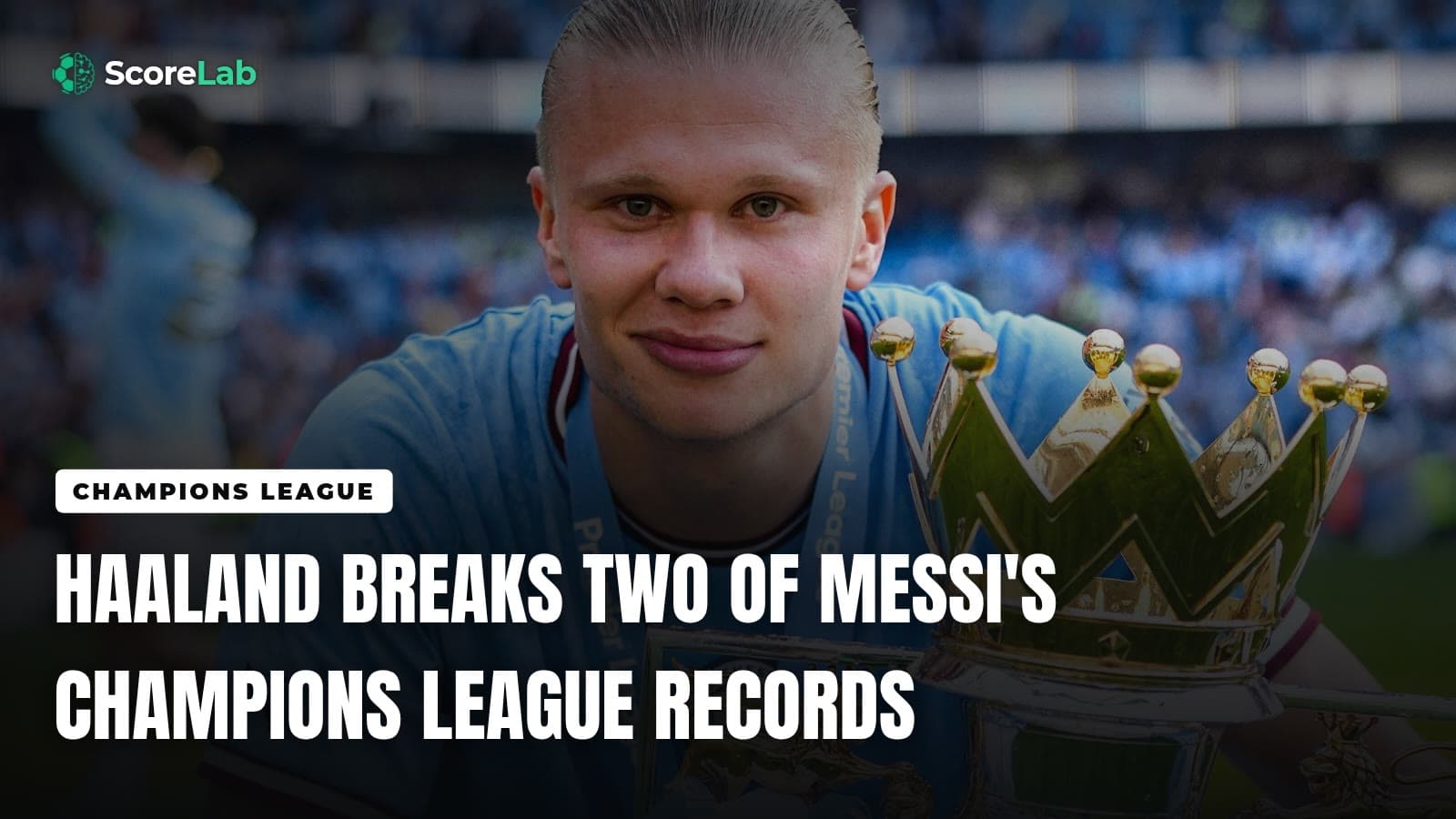
Manchester City's Norwegian striker Erling Haaland has taken two Champions League records away from Lionel Messi in one night. Haaland scored twice as City lost 4-2 to Paris Saint-Germain at the Etihad Stadium on Wednesday 14 October 2026, taking his tally in the competition to 61 goals in his 60th appearance. That makes him both the quickest and the youngest player to reach 60 Champions League goals.
Published statistics show that Messi got to 60 Champions League goals after 80 appearances, aged 26 years and 86 days. Haaland crossed the same line in 60 appearances, one day younger, beating the speed record by 20 games and the age record by a single day.
| Metric | Value |
|---|---|
| Champions League career | 60 games, 61 goals |
| Age at 60th goal | 26y 85d (Messi: 26y 86d) |
| Games to reach 60 goals | 60 (Messi: 80) |
| Champions League goals for Man City | 38 (club record) |
| vs PSG (14 Oct 2026) | 2 goals, 9.05 rating, player of the match |
| Premier League 2026/27 | 6 games, 6 goals, 530 minutes |
Source: ScoreLab data and news sources
Which game did Haaland break the records in?
Haaland broke the records on matchday two of the league phase against Paris Saint-Germain. TNT Sports reported that PSG led 3-0 at half-time before Haaland pulled one back in the 53rd minute and later added a second. Maghnes Akliouche scored PSG's fourth as the French side won 4-2. It was City's first defeat of this Champions League campaign, after a 2-0 win over Porto the previous month.
Despite the result, Haaland was the standout performer. ScoreLab data shows he played the full 90 minutes, earned a 9.05 rating and was named player of the match. He had also scored in City's 3-0 Premier League win at Liverpool on 11 October 2026.
Where does Haaland rank in Man City history?
The brace also lifted Haaland above Sergio Agüero to the top of Manchester City's scoring chart in Europe's elite club competition, with 38 goals for the club in the tournament. The rest of his 61 Champions League goals came before his move to City.
His most productive Champions League season was 2022/23, when, as TNT Sports notes, he scored 12 goals in 11 games, including five in a 7-0 rout of RB Leipzig. City lifted the trophy that season but have not gone beyond the quarter-finals in the three campaigns since.
How is Haaland's season going?
According to ScoreLab data, the 26-year-old has six goals in six Premier League games in 2026/27 and is City's top scorer. Across his club career he has 305 goals in 387 games, and for Norway he has 65 goals in 59 internationals. His contract with City runs until 30 June 2034.
Messi's overall Champions League goal tally remains far ahead of Haaland's; the records the Norwegian has broken concern the speed and age at which he reached the 60-goal mark, not the all-time total. How long he can keep up this pace will become clearer over the remaining league-phase games.
Sources
- 1.
- 2.
Frequently asked questions
Which Messi records did Haaland break?
Haaland became the fastest player to 60 Champions League goals (60 games) and the youngest (26 years and 85 days). Both records previously belonged to Lionel Messi.
How many games did Messi need for 60 Champions League goals?
Messi reached 60 Champions League goals in 80 games, aged 26 years and 86 days. Haaland did it in 20 fewer games.
When did Haaland break the records?
Haaland broke the records with two goals in Manchester City's 4-2 home defeat to PSG in the Champions League on 14 October 2026.
How many Champions League goals has Haaland scored?
Haaland has scored 61 goals in 60 Champions League games, 38 of them for Manchester City.
This analysis was prepared by the ScoreLab Newsroom using the sources listed and ScoreLab data. Editorial policy